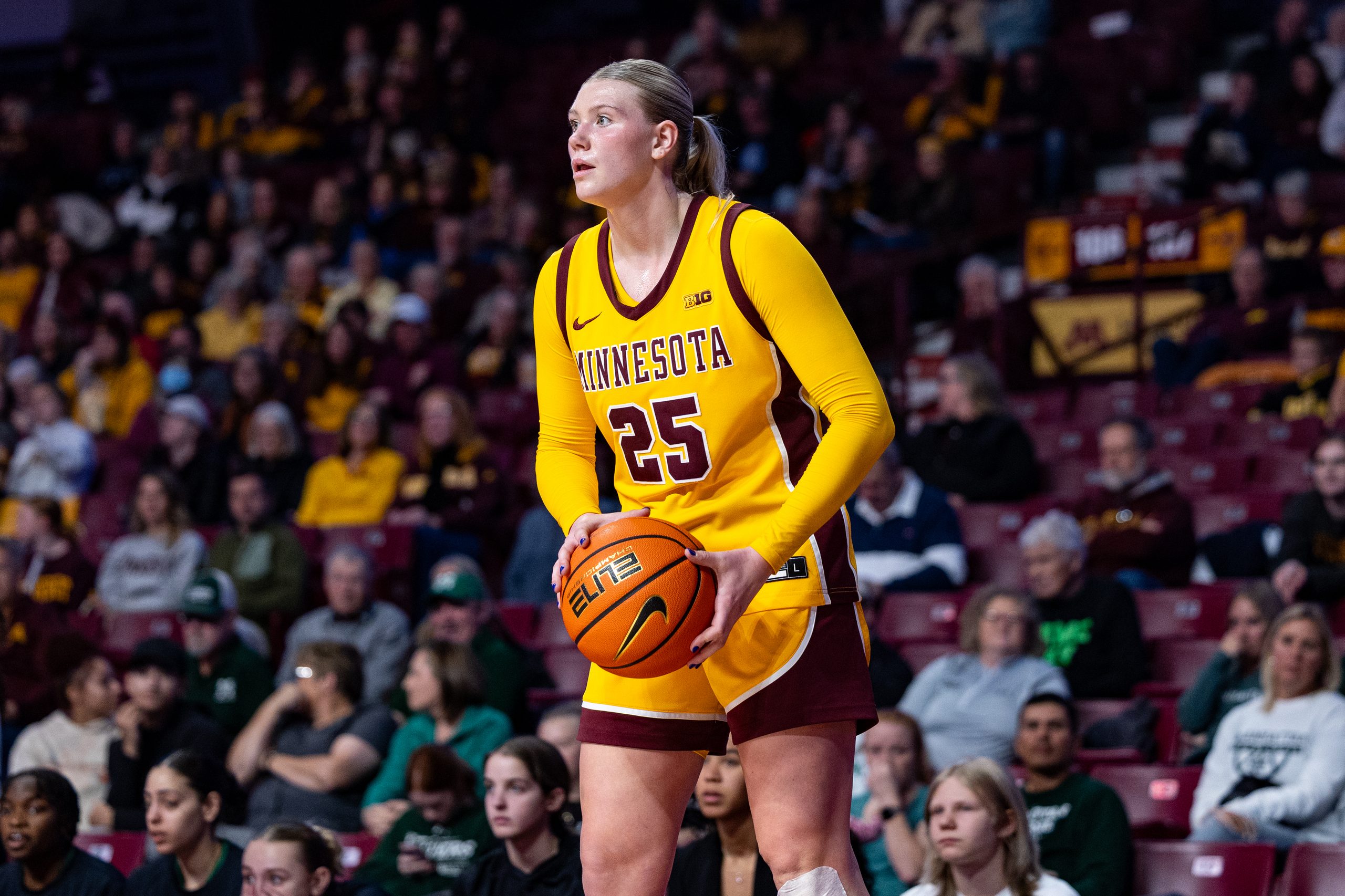
Photo Credit: Gopher Athletics
I have had the pleasure of watching my daughter’s club team this season, and something about the group has really stood out to me.
They share the basketball.
They celebrate one another.
They defend.
They rebound.
They seem far more interested in making the right basketball play than in making sure one particular player gets her statistics.
In other words:
They play unselfish basketball.
And I absolutely love watching it.
When parents hear the phrase unselfish player, they sometimes think it simply means someone who passes instead of shoots.
I think it means much more than that.
An unselfish basketball player understands her role, takes good shots, competes defensively, rebounds, creates opportunities for teammates, and accepts responsibility when things go wrong.
Those habits also happen to be signs of something every young player should try to develop:
Basketball IQ.
Here are six habits I believe can help a young player become a smarter and more unselfish teammate.
1. Understand and Accept Your Role
Basketball is the ultimate team game.
Five players are on the floor, and each one may be asked to do something different.
One player may be the primary scorer.
Another may run the offense.
Someone else may be asked to defend the opponent’s best player.
Another might rebound, screen, or bring energy off the bench.
The question every young player eventually has to answer is:
What does my team need from me?
As parents, we may think we know the answer.
I would caution against deciding it for our children.
Instead, encourage your child to have a respectful conversation with the coach and understand exactly what the coach expects from her.
Then help her embrace that responsibility.
That doesn’t mean a player’s role can never change.
It doesn’t mean parents or athletes will always agree with every coaching decision.
It means understanding that, while you are part of a team, there are times when you must put the team’s needs ahead of your preferred position or role.
My daughter provided a great example.
During club basketball, she primarily played shooting guard.
On her high school team, however, she was often asked to play inside and defend post players.
I’ll admit that this initially bothered me.
We had spent countless hours developing her ball handling and perimeter skills because I viewed her as a guard.
But I never wanted my frustration to become hers.
Instead, I encouraged her to embrace the role her team needed her to play while continuing to work on the skills that would allow her to play on the perimeter.
Something interesting eventually happened.
College coaches began telling us that one of the things they liked most about her game was her ability to play inside and outside.
The role I initially worried would limit her actually made her more versatile.
That taught me something too.
Sometimes our children’s basketball journeys don’t unfold exactly the way we imagined.
That’s okay.
If your child wants a different role, don’t simply complain about the coach.
Go to work.
Improve the ball handling.
Improve the shooting.
Get stronger.
Become a better defender.
Develop the skills that give a coach more options.
That is a lesson much bigger than basketball:
If you want a different opportunity, prepare yourself to earn it.
2. Learn the Difference Between an Open Shot and a Good Shot
There is a fine line between a good shot and a forced shot.
Basketball players have to learn that being open doesn’t automatically mean they should shoot.
A good shot depends on the situation.
Who is shooting?
Where is the shot coming from?
How much time is on the clock?
Is there a teammate with an even better opportunity?
Has the defense been forced to rotate?
Did the offense create an advantage?
I have always believed that a badly forced shot can function almost like a turnover.
If a player dribbles into three defenders and throws up a difficult attempt while teammates are open, the possession may end just as quickly as if she had simply given the basketball away.
Good offensive players learn to let the game come to them.
They don’t decide before the possession:
“I’m shooting this time.”
They read the defense.
They move the basketball.
They attack openings.
They recognize when the defense has broken down.
And then they take advantage.
Shot selection is one of those skills that develops through coaching, experience, and film study.
Parents can help by talking less about how many shots their child took and more about the quality of those shots.
I’d rather see my daughter take eight good shots than fifteen forced ones.
That is basketball IQ.
3. Commit to Defense Even When You Aren’t Scoring
Every player wants to score.
That’s natural.
Scoring is fun.
But there will be games when your child isn’t getting many shots.
There will also be nights when the shots she does take simply won’t fall.
What happens then?
An unselfish player finds another way to impact the game.
She guards.
She communicates.
She helps.
She rotates.
She takes a charge.
She contests shots.
She dives for loose balls.
One of the clearest signs of selfish basketball is when a player’s defensive effort changes because she hasn’t touched the ball enough on offense.
She misses a shot and jogs back.
A teammate doesn’t pass to her and suddenly her defensive energy disappears.
That sends a terrible message.
Your defensive effort should not depend on your offensive statistics.
Some nights, your shot will abandon you.
Your effort never has to.
That is something young players can control every time they walk onto the court.
4. Create Your Own Opportunities Through Offensive Rebounding
Sometimes the basketball simply doesn’t come your way.
Your child may make the right cuts and still not receive the pass.
She may be open and never get the ball.
What can she do?
Go get it.
I have always encouraged my daughters to become aggressive offensive rebounders.
One of the great things about offensive rebounding is that you don’t have to wait for somebody to create an opportunity for you.
You can create one yourself.
I remember one high school game in which my daughter scored approximately 15 points in the first half, with much of the production coming from offensive rebounds and put-backs.
Nobody drew up those plays for her.
She created them through effort.
And offensive rebounding brings energy to a team.
Few things get a bench more excited than watching a teammate come flying in from the perimeter, grab a missed shot, and put it back in.
It is blue-collar basketball.
It is effort.
And it is completely unselfish because every offensive rebound gives your entire team another possession.
5. Make the Extra Pass
One of the prettiest plays in basketball may be the extra pass.
A player catches the basketball and has an open shot.
She could take it.
But she sees a teammate who has an even better shot.
Pass.
Suddenly a good opportunity becomes a great one.
There isn’t a formula that tells a player when she must make the extra pass.
Basketball happens too quickly for that.
It becomes something players begin to recognize through experience.
Good teams move the basketball.
Great teams seem to enjoy creating shots for one another.
Think about the difference between these two mindsets:
“I’m open.”
and
“Who has the best shot?”
That second question is at the heart of unselfish basketball.
And something interesting happens when an entire team begins thinking that way.
The ball moves faster.
The defense has to rotate.
Players become more difficult to guard.
Everyone becomes involved.
And usually, the quality of the offense improves.
The extra pass doesn’t always show up in the box score.
But coaches see it.
Teammates see it.
And basketball people appreciate it.
6. Take Responsibility and Develop a Next-Play Mentality
Every basketball player makes mistakes.
Every single one.
Turnovers happen.
Defensive assignments get missed.
Players take bad shots.
Someone forgets to box out.
Nobody plays a perfect game.
The important question is:
What happens after the mistake?
I have always encouraged my daughters to develop what I call a next-play mentality.
Make the mistake.
Recognize it.
Own your part in it.
Learn from it.
Then move on.
Don’t spend the next three possessions complaining.
Don’t blame a teammate.
Don’t stare at the coach.
Don’t throw your hands into the air.
Don’t let your body language tell the entire gym that you are angry.
The game is still happening.
The mistake is already in the past.
Maybe you threw a bad pass.
Sprint back and get a stop.
Maybe your teammate missed an assignment.
Help her on the next possession rather than embarrassing her.
Maybe you missed an open three.
Keep playing.
Taking responsibility doesn’t mean accepting blame for everything that goes wrong.
It means being mature enough to evaluate your own role honestly and correct what you can control.
That is an incredibly important basketball skill.
It is also an incredibly important life skill.
What Does Success Really Look Like?
During one high school season, I asked my youngest daughter why she wasn’t taking more shots.
I had seen several possessions where I thought she had passed up good opportunities.
Her answer surprised me.
She told me she didn’t want to take bad shots and look foolish in front of her teammates or the people watching.
What I eventually realized was that she wasn’t really afraid to shoot.
She wanted to play the game the right way.
So I asked her another question.
“Would you really be happy if you scored zero points?”
She thought about it.
Then she answered honestly.
Of course she wanted to score.
Every basketball player does.
But if she scored zero points and her team won?
Yes.
She could live with that.
Winning with her teammates mattered more.
I remember thinking:
She’s starting to understand it.
That doesn’t mean players shouldn’t be aggressive.
Unselfish basketball does not mean becoming passive.
If you have a good shot, take it.
If you have an advantage, attack.
If your team needs you to score, score.
Being unselfish means understanding that the objective isn’t to build your own stat line.
The objective is to help your team succeed.
Sometimes that means scoring 25.
Sometimes it means making the extra pass.
Sometimes it means defending the other team’s best player.
Sometimes it means grabbing ten rebounds.
And occasionally, it means doing something important that nobody in the stands notices at all.
That is basketball IQ.
And when five players begin thinking that way together, basketball becomes a beautiful game to watch.