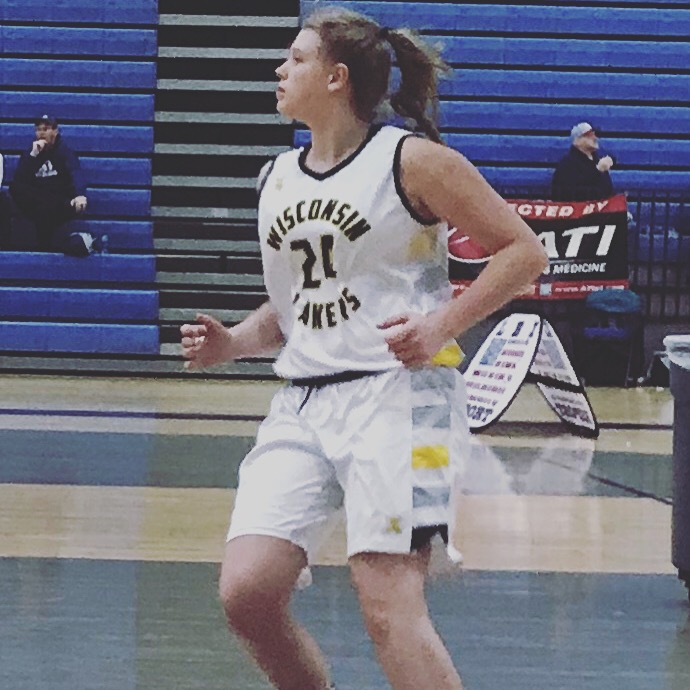
Bad sportsmanship is something every family involved in youth sports will eventually encounter.
No matter how good the coaches are, how organized the tournament may be, or how well we try to prepare our children, we cannot completely shield them from negative behavior.
And perhaps we shouldn’t always try.
Some of the most valuable lessons basketball has taught my daughters have come from situations I wish had never happened.
A disrespectful opponent.
An out-of-control coach.
An angry parent.
A cheap shot.
None of those experiences are enjoyable in the moment.
But each one creates an opportunity for us, as parents, to have a conversation with our children about character, self-control, respect, and how they should respond when someone else behaves badly.
Basketball had only been back for about five weeks when I originally wrote this article, and I had already witnessed four examples of poor sportsmanship that stuck with me.
More importantly, each one created a lesson.
1. Trash Talking
We were playing in a tournament in Illinois against a very talented team with several Division I-level athletes.
They were physical and aggressive, and they ran a difficult man-to-man press for most of the game.
Our team happened to be shooting extremely well from three-point range and eventually built a 17-point lead in the second half.
Then the other team started making a run.
It became a terrific basketball game.
Unfortunately, as the game became more competitive, some of the opposing players began trash talking.
I heard profanity directed toward our players several times.
At one point, an opposing player made an excellent defensive play by blocking our point guard’s three-point attempt.
It was a great block.
But instead of simply celebrating the play with her teammates, she got into our player’s face and yelled an obscenity.
That ruined what otherwise would have been an impressive basketball moment.
After the game, I talked to my daughter about it.
There will always be people who try to get under your skin.
Basketball certainly isn’t the only place that happens.
It happens at school.
It happens in the workplace.
It happens in business.
It happens throughout life.
As someone who has spent much of my professional career in sales, I have experienced competitors criticizing me, my company, and my products. I have also dealt with people within organizations making arrogant or condescending comments.
The important question is not whether someone behaves badly toward you.
The question is:
How are you going to respond?
My advice to my daughter was simple.
Don’t get into a verbal battle.
Don’t allow another player to take you out of your game.
If someone talks trash, answer with your play.
Make the next shot.
Play great defense.
Win the possession.
Win the game.
You cannot always control someone else’s behavior. You can control your response.
That is a lesson that extends far beyond basketball.
2. Disrespectful Coaches
My daughter and I were waiting for the game before ours to finish.
It was close, and both teams were competing hard.
One team had a very tall post player—probably around 6-foot-2.
During the game, she received the basketball underneath the basket with nobody near her.
She missed the layup.
Her coach immediately removed her from the game and began yelling at her on the bench.
I remember turning to my daughter and saying:
“She already knows she missed the shot.”
The player was probably more disappointed than anyone else in the gym.
What was screaming at her going to accomplish?
I thought about what I would have preferred to hear from a coach:
“Shake it off. Take a quick break. You’re going back in. We need you.”
Accountability matters.
Coaches should correct players.
Basketball players need to learn how to accept criticism.
But there is a difference between coaching a mistake and humiliating the person who made it.
Later in the same game, another incident occurred.
The officiating crew consisted of one male official and one female official.
With less than two minutes remaining, a pass struck an opposing player’s foot.
The female official correctly did not call a kicking violation because the contact appeared unintentional.
The coach became furious.
He approached the female official aggressively and screamed at her from very close range.
I remember wondering whether he would have approached the male official with the same level of aggression.
I couldn’t know the answer.
But the situation gave me an opportunity to talk with my daughter about intimidation.
Throughout her life, she may encounter people—men or women—who attempt to intimidate her.
Sometimes it will happen because of her age.
Sometimes because of her position.
Sometimes because someone believes they can get away with it.
And sometimes, unfortunately, gender may play a role.
The female official in that game remained composed and stood her ground.
That was the lesson I wanted my daughter to notice.
You don’t have to match someone else’s anger.
You don’t have to scream louder.
You can remain professional, confident, and firm.
Strength does not always have to be loud.
3. Scary Parents
Parents can sometimes be the worst part of youth sports.
And yes, I say that as a basketball parent.
My oldest daughter joined us for a tournament in Illinois because she was preparing to leave for college and wanted to spend some time watching her younger sister play.
Before the first game, our head coach asked if she could help film.
She agreed and set up the camera near midcourt between two sections of bleachers.
The game was extremely physical.
At one point, my younger daughter was bringing the basketball up the court while a defender kept a hand on her hip.
My oldest daughter, who was filming, yelled toward the official:
“Get the hands off!”
On the next possession, one of our defenders used similar contact.
A man sitting nearby—well into his forties—turned toward my 17-year-old daughter and angrily yelled:
“See! You guys are doing the same thing!”
My daughter was startled and genuinely uncomfortable.
And I understood why.
Why does a grown adult need to confront a teenager over something happening in a youth basketball game?
There was no reason for it.
Thankfully, I was working the clock and wasn’t sitting next to her at the time, because I’m not sure my initial reaction would have been particularly calm either.
But after thinking about it, the incident created another conversation.
I reminded my daughter that words have consequences.
She had made what she considered a harmless comment.
Someone nearby interpreted it differently.
That certainly did not justify his reaction.
But the experience taught her something about public situations.
You never know who is listening.
You never know what kind of day someone is having.
And you never know how another person may react.
That doesn’t mean our children should be afraid to speak.
It means they need to develop awareness.
Use good judgment.
Understand the environment.
And if an adult becomes aggressive or threatening, move away and find another trusted adult immediately.
Youth sports are supposed to be for the kids.
Sometimes the adults need to remember that.
4. Cheap Shots
It was Sunday, and we were playing the final game of the tournament.
We had faced the same opponent a few weeks earlier in Cedar Rapids and won by only one point.
This game was different.
Halfway through the second half, we were ahead by approximately 25 points.
The outcome was essentially decided.
My daughter was guarding a player in the post.
She was playing physical, legal post defense and working to establish position on the low side.
Suddenly, the offensive player swung an elbow that caught my daughter in the jaw.
Then another elbow caught her in the chest.
Our parent section erupted.
No foul was called.
I was furious.
After the game, however, I asked my daughter a question.
“How did you keep your cool?”
Her answer made me proud.
She said something to the effect of:
“If I hit her back, I’m probably the one who gets called for the foul. And then I have to deal with you and my coach.”
She was right.
Anyone who has spent enough time around sports understands how often the person who retaliates gets caught.
The original action may be missed.
The response gets seen.
That moment gave us an opportunity to discuss one of life’s hardest lessons:
Sometimes walking away requires more strength than fighting back.
There will be people throughout life who are angry.
There will be people who are jealous.
There will be people who intentionally try to provoke you.
You cannot prevent that.
What you can do is prepare yourself to respond with as much self-control as possible.
I was a very proud dad that afternoon.
Not because she scored a certain number of points.
Not because we won.
I was proud because she demonstrated maturity when it would have been very easy to lose her temper.
The Good Still Outweighs the Bad
After describing four examples of poor sportsmanship, it would be easy to make youth basketball sound terrible.
It isn’t.
In fact, during the same tournaments, I noticed something else.
Players from opposing teams repeatedly helped one another off the floor after falls.
Kids congratulated opponents after good plays.
Coaches complimented players from the other team.
Parents cheered for great basketball regardless of which uniform a player was wearing.
Those moments happen too.
And I think they happen much more often than the negative ones.
The problem is that bad behavior tends to attract our attention.
One ugly incident can overshadow dozens of good ones.
As parents, I believe we need to make sure our children notice both.
Talk about the player who helped an opponent up.
Talk about the coach who encouraged a struggling athlete.
Talk about the referee who remained calm under pressure.
Talk about the opposing parent who complimented your child after the game.
Those moments teach lessons too.
Turning the Negative Into Something Positive
We cannot make youth sports completely fair.
We cannot eliminate bad calls.
We cannot guarantee that every coach will behave appropriately.
We cannot control every parent sitting in the stands.
And we certainly cannot make every opposing player display perfect sportsmanship.
What we can do is help our children process what they experience.
That may be one of the most important roles we have as sports parents.
When something negative happens, don’t simply complain about it on the drive home.
Use it.
Ask questions.
What happened?
How did it make you feel?
How did you respond?
Would you do anything differently next time?
What can you learn from it?
Basketball gives our children a controlled environment in which to experience many of the same emotions they will encounter later in life.
Success.
Failure.
Jealousy.
Anger.
Pressure.
Disappointment.
Unfairness.
Competition.
The game cannot protect them from those things.
But it can help prepare them for them.
I have always tried to teach my daughters to expect good from people while understanding that they will occasionally encounter the opposite.
Life will not always be fair.
Neither will basketball.
That doesn’t mean we become cynical.
It means we learn how to respond.
And sometimes the worst examples of sportsmanship can provide some of the best opportunities for parents to teach.
Thank you for reading Youth Basketball Parent. If you enjoy stories about the lessons our children can learn through basketball, I would be honored if you would subscribe so you are notified when new articles are published.