There are moments as a basketball parent when the noise in the gym seems to disappear.
The crowd is still yelling.
The coaches are still shouting instructions.
The scoreboard is still glowing.
But for a few seconds, everything seems to slow down.
I experienced one of those moments during the first game of sectionals.
My daughter’s team was playing a young and scrappy Verona High School team, and the game had come down to the final possession.
Verona led by two points.
Ten seconds remained.
We had the basketball.
One of our junior guards pushed the ball up the court.
Five.
Four.
Three.
She put up a shot.
Miss.
My daughter grabbed the offensive rebound and immediately went back up.
The whistle blew.
Foul.
One second remained on the clock.
Two free throws.
We were down by two.
I felt as though my heart had stopped.
The entire season had suddenly come down to my daughter standing alone at the free-throw line.
And almost immediately, two completely different thoughts began racing through my mind.
What If She Misses?
Fear took over first.
My daughter had been having an outstanding season. She was averaging roughly 20 points and nine rebounds per game and shooting about 85 percent from the free-throw line.
Everybody in the gym knew she was supposed to make these shots.
At least that was what I told myself.
And then the irrational thoughts began.
What if she misses?
What will people say?
Will they remember everything she accomplished during the season—or only these two free throws?
Will somebody call her a choker?
Will she blame herself for the season ending?
As a father, I desperately wanted to protect her from that disappointment.
My rational mind knew better.
If she missed the free throws, the sun would still come up the next morning.
She would still be the same daughter.
She would still have had a terrific season.
She would still have teammates who loved her.
She would still have a family that was incredibly proud of her.
Basketball games feel enormous while we are living through them.
But eventually, they become memories.
Still, sitting in that gym, it didn’t feel small.
It felt enormous.
And I knew how badly she wanted to make those shots—not because making them would somehow validate who she was, but because she had invested so much of herself into becoming prepared for moments exactly like this one.
What If She Makes Them?
Then my thoughts shifted.
Instead of thinking about everything that could go wrong, I started thinking about all the nights we had spent together in the driveway.
At the end of many workouts, we would create imaginary pressure situations.
Five seconds left.
Four.
Three.
Championship game.
Down by two.
Make the shot to win.
Sometimes it was a three-pointer.
Sometimes it was free throws.
Sometimes we would invent an entire game in our minds.
We did it because it was fun.
But we also did it because I wanted her to experience—even if only in her imagination—the feeling of having to make a shot when something was on the line.
We had repeated those situations over and over again.
And suddenly, sitting in the stands, a strange calm came over me.
I realized something.
We had been practicing for this moment for years.
Obviously, the driveway could never recreate a packed gym during a sectional game.
It couldn’t reproduce the noise.
It couldn’t reproduce the pressure.
And it certainly couldn’t reproduce the feeling of knowing your season might end if the shots didn’t fall.
But the mechanics were the same.
The routine was the same.
The free-throw line was the same distance from the basket.
She had done this thousands of times.
I remember thinking:
She’s got this.
The First Free Throw
She stepped to the line.
The opposing fans were screaming at the top of their lungs.
She went through her routine.
Shot.
The ball hit the front of the rim.
Then the backboard.
For what felt like an eternity, the basketball seemed to hang around the rim.
Finally, it dropped through.
I exhaled.
One down.
One to go.
The Second Free Throw
She received the basketball again.
Same routine.
Same line.
Same basket.
This time:
SWISH.
Tie game.
We were going to overtime.
She had done it.
Two pressure-packed free throws with the season hanging in the balance.
Unfortunately, this isn’t one of those sports stories where everything ends perfectly.
We lost in overtime by one point.
Our season was over.
There would be no dramatic championship run.
No Hollywood ending.
But strangely, that wasn’t the part of the game that stayed with me.
What stayed with me were those two free throws.
Breakfast With My Daughter
The following Saturday morning, I decided to take my daughter to breakfast.
I wanted some time alone with her.
As a former player, I understood how difficult the situation had been.
As her father, I couldn’t adequately explain how proud I was.
Not simply because she made the free throws.
I was proud because she had stood in one of the most pressure-filled situations a young athlete can experience and trusted the work she had put in.
I wanted her to know that.
So we sat down at the restaurant and opened our menus.
I immediately launched into my fatherly speech.
I talked about the game.
I talked about pressure.
I talked about all those nights in the driveway.
I tried to explain how proud I was of the way she handled herself.
I was probably becoming a little emotional.
She listened.
Then she paused.
She looked at me.
And she asked:
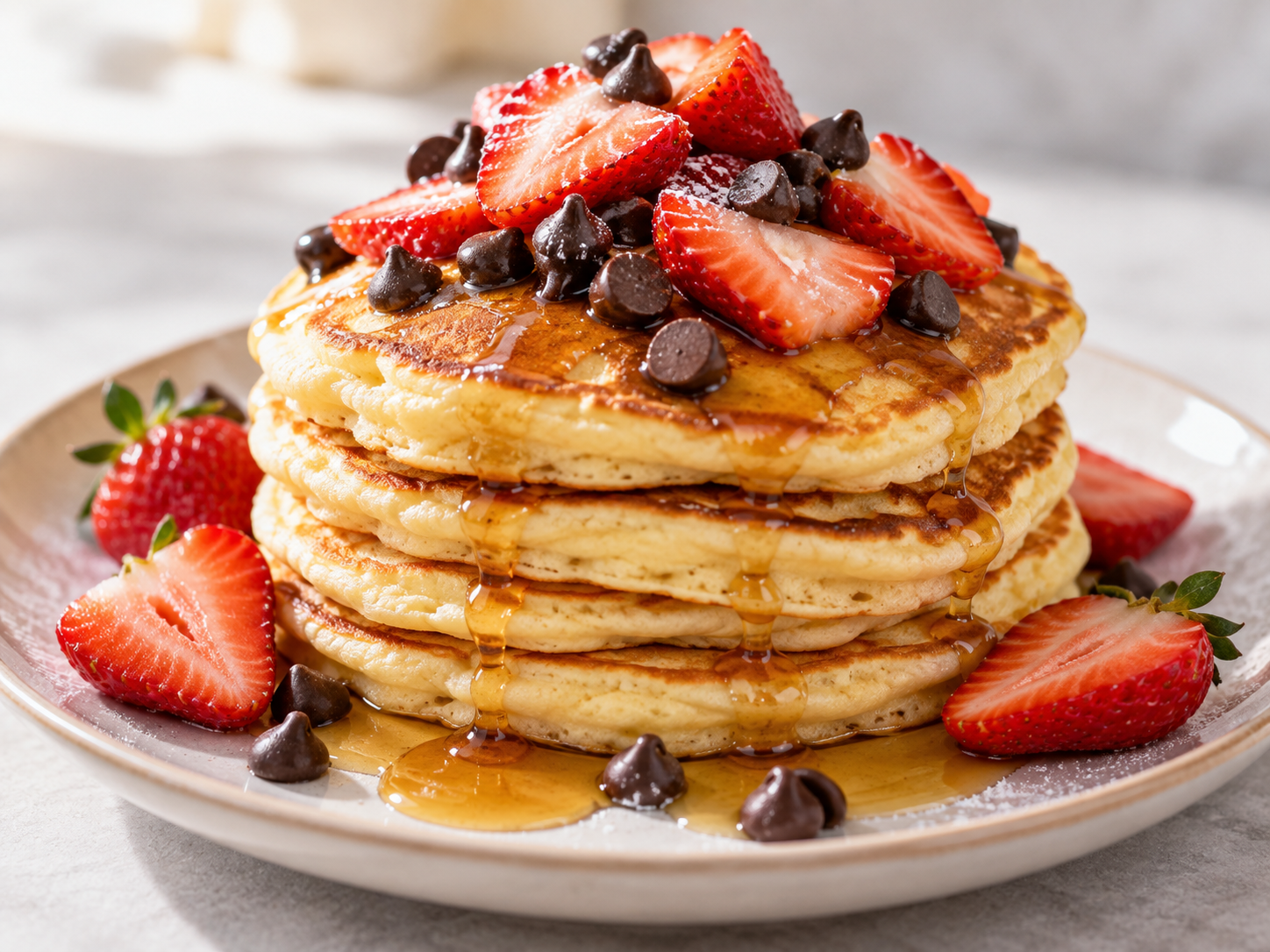
“Should I get strawberries or chocolate chips with my pancakes?”
I stared at her for a moment.
Then I smiled.
“Sweetie,” I said, “why not get both?”
And suddenly I understood.
It Was About the Pancakes
For me, those free throws represented years of basketball.
They represented driveway workouts.
They represented practices, tournaments, long drives, wins, losses, tears, and everything else that had gone into helping my daughter become the player she had become.
For her?
The game was over.
It was Saturday morning.
And she wanted pancakes.
There was something wonderfully healthy about that.
As parents, we sometimes carry our children’s athletic experiences more heavily than they do.
We analyze.
We replay possessions.
We think about what might have happened.
We worry about how they will respond.
Meanwhile, our children sometimes possess a remarkable ability to move on.
Maybe there is a lesson in that for us.
Basketball matters.
The work matters.
The relationships matter.
The memories certainly matter.
But basketball is still only part of their lives.
Our children are more than the shots they make.
They are more than the shots they miss.
They are more than the final score.
And sometimes the best reminder of that comes when your child looks across the breakfast table after one of the biggest basketball moments of her young life and asks the truly important question:
Strawberries or chocolate chips?
The answer, of course, is both.
Always get both.